













The hidden cost of taking too long to hire lawyers in a tight market
The hidden cost of taking too long to hire lawyers in a tight market

In this article we discuss how taking too long to hire can lead to less than favourable outcomes. Read on to discover the financial, cultural and reputational costs of being slow to recruit.
Law firms do not set out to recruit slowly. Very few partners wake up intending to stretch out hiring decisions or to complicate the process. However, it can be challenging to prioritise short listing and interviews. Partners are busy, client matters and meetings come first, and billable work needs to be completed to deadlines.
As legal industry specialist recruiters with more than 50 years’ experience, we also understand why some firms take comfort in “just seeing a few more candidates” or in attempting to manage recruitment internally in the hope of keeping costs down. On paper, that approach might feel sensible.
In today’s legal market, however, delays to recruit are rarely cost neutral. Acting slowly is expensive, and it will almost always affect the outcome.
In a recruitment market where high-quality lawyers and experienced legal support staff are in short supply, the passing of time itself becomes a competitive disadvantage. The longer a role remains open, the more the cost builds.
Below are the real impacts we see every day when hiring drags on.
The financial cost: lost productivity
Every unfilled role creates a productivity gap because the work does not disappear when someone leaves. Matters are often redistributed to already stretched teams, partners take on more operational work than they should, and overall billable capacity drops, even if people are working longer hours.
What many firms underestimate is that the cost of leaving a role vacant often exceeds the cost of recruiting effectively. A delay of even two to three months can mean missed billable hours, slower turnaround times for clients, and reduced capacity across teams. By the time an offer is finally made to a suitable candidate, the financial impact has already been felt.
The opportunity cost: the best candidates do not wait
In a candidate-short market, strong lawyers rarely sit around waiting for offers. The most commercially attractive candidates are usually interviewing with multiple firms at once, receiving offers within days rather than weeks. Many of these high-quality candidates expect a sense of momentum from prospective employers.
When decision-making stalls, candidates don’t typically push harder or negotiate more. In our experience, they simply accept another offer, often without circling back or asking for feedback. Firms are then left re-advertising the role, compromising on fit, or continuing to operate understaffed. None of those options lead to best-practice outcomes.
The cultural cost: burnout drives further attrition
Delayed hiring doesn’t just affect output. It affects team morale.
When vacancies stay open for months, your existing staff notice. While company leadership, with the best intentions, believe they are being cautious with hiring to get the right person, the message that often lands with teams can be very different.
To them, it can feel like resourcing isn’t a priority, that excessive workloads are becoming the norm, or that the only way to regain some life balance is to leave.
This is how one resignation can quickly become two or three. In Melbourne’s tight legal market, burnout is one of the biggest drivers of secondary attrition, and slow hiring can be a significant contributor.
The reputational cost: the market is watching
Law firms often underestimate how closely candidates observe recruitment behaviour. Delays can quietly signal indecision at partnership level, internal misalignment, or a lack of urgency and respect for candidate time, even if none of those things are intentional.
Word travels quickly through recruiter networks and peer conversations. Firms that develop a reputation for moving slowly or going quiet mid-process tend to receive fewer high-quality applications over time. Top candidates approach them more cautiously, and attracting interest for future searches becomes harder than it needs to be.
In our experience, reputation is built, or eroded, one hiring process at a time.
The strategic cost: recruitment becomes reactive
When firms rely solely on internal recruitment while juggling client demands, hiring often becomes reactive. A resignation triggers a scramble, decisions are rushed at the end rather than clarified upfront, and long-term workforce planning falls away.
Ironically, firms trying to save time or money by handling recruitment themselves frequently end up taking longer, re-hiring for the same role within 12 months, or losing confidence in the process altogether.
Why specialist legal recruiters change the equation
At Legal People, we don’t simply introduce candidates. Much of our role includes sourcing passive candidates to create momentum, providing real-time market intelligence that supports confident decision-making, managing candidate expectations, and reducing business risk by screening for motivation, cultural fit, and long-term intent.
Just as importantly, we protect your employer brand when timing is tight. We engage with the candidate to help absorb time pressures or market noise to ensure that you can make better decisions faster, without sacrificing quality of hire.
In Melbourne’s candidate-short legal market, slow hiring decisions aren’t cautious. They’re costly.
The firms that consistently attract and retain the best lawyers and legal support staff are not always the biggest or the highest paying. They are the ones that understand the true cost of delay, act decisively when the right candidate appears, and use expert market insight to reduce risk rather than increase it.
If recruitment feels harder than it used to, it is not your imagination. Speed, clarity, and informed decision-making remain powerful advantages when they are used well.
If you would like tailored insights or support navigating your next legal hire, our team at Legal People would love to assist. You can contact us at info@legalpeople.com.au.
Further reading:
Share

Competition for experienced lawyers is high. How employers can demonstrate why their firm and opportunity is the one worth making the move for.

Burnout is one of the biggest challenges faced by lawyers. Our advice on ensuring you're in the right environment for a rewarding and sustainable career.
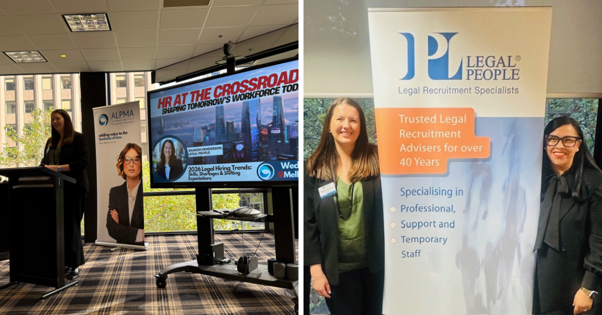
We explore how Melbourne's legal hiring market has fundamentally changed, from "job hugging" and mid-level lawyer shortages, to areas of law facing talent shortages.