












The legal hiring market in Melbourne has changed. Permanently.
The legal hiring market in Melbourne has changed. Permanently.

In this article we explore how Melbourne’s legal hiring market has fundamentally changed. Read on to find out about “job hugging”, the ongoing shortage of mid-level lawyers, which area of law is facing a critical shortage and the growing importance of employer credibility.
The legal recruitment conversation in 2026 looks very different to what it did two years ago.
For much of the post-pandemic period, law firms across Melbourne operated in an aggressively candidate-driven market. Salaries surged. Sign-on bonuses became commonplace. Lawyers moved quickly and often. Firms competed heavily on flexibility and remuneration to keep pace. That market has now evolved, but not necessarily eased.
What we’re seeing across Victoria’s legal sector is not a return to employer control. Rather, it’s the emergence of a far more complex hiring landscape shaped by economic uncertainty, candidate caution, structural talent shortages, and shifting expectations around what lawyers genuinely value in their careers.
And for firms still relying on pre-2024 recruitment strategies, the market is becoming increasingly unforgiving.
Welcome to the era of "Job Hugging"
One of the most significant behavioural shifts in the Australian workforce right now is the rise of what many are calling “job hugging”.
Unlike the “Great Resignation” period of 2022–2023, where professionals felt empowered to move freely in pursuit of better pay and flexibility, many employees in 2026 are staying put not necessarily because they are fully engaged, but because they are cautious.
Economic uncertainty, rising living costs, global instability, AI disruption, and a more competitive hiring environment have all contributed to a workforce prioritising security over exploration.
In the legal sector, this trend is particularly pronounced. Many lawyers are burnt out and exhausted. Many are disengaged. Yet they are still reluctant to move. That creates a unique challenge for employers: retention figures can appear healthy on paper while underlying engagement quietly deteriorates.
For law firms, this distinction matters enormously because retention driven by fear is not the same as retention driven by culture, leadership, or career satisfaction.
The mid-level lawyer shortage is now structural
Despite significant growth in the number of practising solicitors nationally, the legal industry continues to face severe shortages in one critical segment of the market: lawyers with approximately 3–5 years PQE. This has become the true bottleneck in legal hiring.
At graduate level, supply remains relatively strong. Australian universities continue producing large numbers of law graduates each year, giving firms access to broad entry-level talent pools.
At senior levels, while hiring becomes more specialised, there is still an established cohort of experienced practitioners available across private practice, in-house, consulting, and alternative legal careers.
But the middle of the funnel is where pressure intensifies.
This is where burnout, attrition, overseas moves, career changes, and transitions into in-house roles all collide, precisely at the point where firms need lawyers capable of independently running matters while remaining commercially cost-effective.
In Melbourne, this imbalance is now shaping hiring strategies across almost every major practice area. Firms are increasingly competing for the same limited group of mid-level lawyers, particularly in high-demand areas such as:
- Family Law
- Employment & Workplace Relations
- Commercial Litigation
- Insolvency & Restructuring
The result is a market where speed, clarity, and employer reputation have become just as important as salary.
Salary still matters, but it's no longer enough
One of the biggest misconceptions in today’s market is that increasing salary alone will solve attraction problems. It won’t.
At Legal People, our recruitment and placement data highlights something we are seeing consistently across Melbourne legal recruitment conversations: lawyers are making more considered career decisions than they were two years ago.
Yes, remuneration remains important, particularly given ongoing cost-of-living pressures. But candidates are increasingly assessing opportunities holistically.
The firms attracting and securing talent most effectively are typically the firms clearly articulating their Employee Value Proposition including:
- Flexible working arrangements
- Realistic workload expectations
- Leadership quality
- Career progression pathways
- Team culture
- Professional development opportunities
- Wellbeing initiatives
- Genuine flexibility for parents and carers
In many ways, and particularly in Melbourne, flexibility has shifted from being a “perk” to becoming a baseline expectation. Candidates now expect hybrid work. They expect autonomy. They expect transparency around progression. And they are conducting extensive due diligence before engaging with opportunities.
Today’s legal candidates are highly informed consumers of employer brands. They are reviewing LinkedIn activity. They are speaking with peers. They are checking reviews. They are assessing whether a firm’s external messaging aligns with the lived employee experience internally.
And if there is inconsistency, the market finds out quickly.
Melbourne's legal market is becoming more relationship-driven
One of the more interesting trends emerging in 2026 is the increasing importance firms are placing on career stability and long-term alignment.
After several years of rapid movement across the profession, many employers are now scrutinising tenure more closely. Candidates with multiple short-term moves are facing more questions than they would have in previous years.
At the same time, counteroffers are becoming more aggressive. Strong lawyers are often receiving multiple opportunities simultaneously, while existing employers are working harder than ever to retain talent once a resignation occurs.
This means recruitment processes themselves have become strategically critical. The firms securing talent effectively are usually those demonstrating:
- Faster decision-making
- Direct partner engagement
- Clear communication and feedback
- Strong recruiter partnerships and briefing processes
- Efficient interview timelines
- Well-articulated Employee Value Propositions (EVPs)
Slow recruitment processes are increasingly interpreted as organisational indecision. In a cautious market, confidence matters.
Family law demand is reaching critical levels
Perhaps no area better illustrates current market pressures than Family Law. Demand for family lawyers across Melbourne has become extraordinary, particularly from 2 years PQE onwards.
Many specialist family law firms are growing rapidly, but the pipeline of talent is simply not keeping pace with demand. Burnout is also becoming increasingly visible in this space.
Senior family lawyers are reporting higher emotional fatigue, more complex client expectations, and growing pressure around responsiveness and availability. From a workforce planning perspective, this presents a long-term sustainability issue for the profession.
More firms may need to rethink graduate pathways and structured early-career development specifically within Family Law if the sector hopes to address future shortages.
AI is entering the legal hiring conversation
While AI has not yet fundamentally transformed legal recruitment, it is unquestionably changing candidate psychology and operational processes. Candidates are increasingly concerned about how AI is being used in screening, assessment, and recruitment workflows.
At the same time, firms are beginning to implement new HRIS platforms, automation tools, and AI-assisted processes internally.
The real opportunity for legal employers is not replacing human interaction, it is improving candidate experience, reducing inefficiencies, and allowing recruitment teams and leaders to spend more time on relationship-building and strategic hiring decisions.
In professional services, trust still matters and remains deeply human.
The firms that will continue to win talent in 2026
The firms performing best in today’s market are rarely the firms with the highest salaries alone. They are the firms with clarity. With, clear culture. They have clear leadership and offer clear career progression. They have flexibility that can be seen and best practice communication. And importantly, they have consistency between what they promise externally and what employees actually experience internally.
The firms that are winning talent are the ones that run, what we call, a “Gold Standard Recruitment Process”. They are nimble and move with speed and momentum, they have quick feedback turnaround and are engaged in the process at a senior level. They make and offer quickly. All these signal intent and interest.
In a legal market increasingly shaped by caution, burnout, and selective movement, firms are no longer simply competing on jobs. They are competing on credibility.
And in Melbourne’s legal sector, credibility has become one of the most valuable recruitment assets a firm can have.
If you would like tailored insights or support navigating your next legal hire, our team at Legal People would love to assist. You can contact us at info@legalpeople.com.au.
Further reading:
Share

Competition for experienced lawyers is high. How employers can demonstrate why their firm and opportunity is the one worth making the move for.

Burnout is one of the biggest challenges faced by lawyers. Our advice on ensuring you're in the right environment for a rewarding and sustainable career.
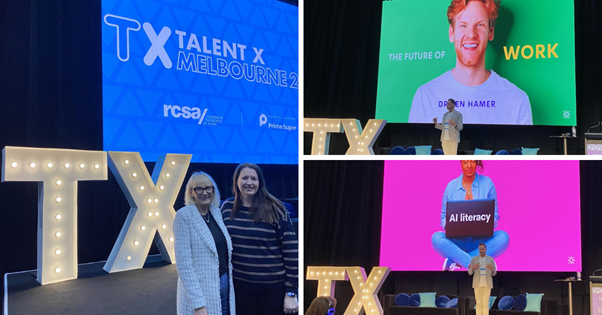
In May Legal People attended the RCSA Talent X event. This article explores our strongest takeaways as they relate to legal recruitment.