











What TalentX 2026 revealed about the future of legal recruitment
What TalentX 2026 revealed about the future of legal recruitment
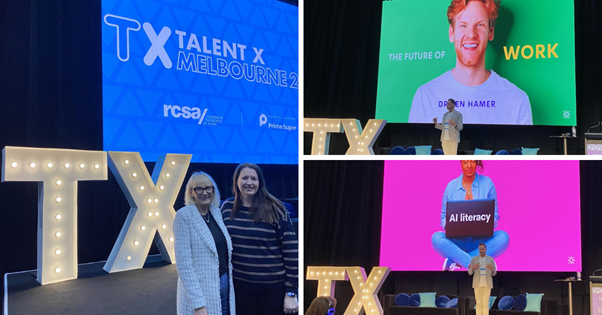
In May Legal People attended the RCSA Talent X event. We discuss our strongest takeaways as they relate to legal recruitment, including AI, workforce expectations and what lies ahead for hiring managers.
TalentX 2026 in Melbourne in late May, brought together recruitment leaders to discuss AI, changing workforce expectations and the future of hiring. The Legal People team, represented this year by Sharon Henderson and Laine McKenzie enjoyed the day networking with colleagues, NPA associates, vendors and speakers.
The value of human judgement
Having had some time now to consider the themes of the conference, our team’s strongest takeaway as it relates to legal recruitment, was that as recruitment becomes more automated and more complex, specialist human judgement is becoming even more valuable.
This is particularly true in our sector, where hiring decisions carry commercial, cultural and reputational risk. A strong legal appointment is rarely just about technical capability. It is about judgement, communication, leadership potential, client fit and long-term alignment, the kinds of qualities that cannot be assessed through automation alone.
AI is reshaping the recruitment process. Candidates are using AI-assisted resumes and interview preparation tools, while employers are automating parts of sourcing and screening. Applications are becoming more polished, generic, more keyword-optimised and, in some cases, more difficult to distinguish at face value.
But one of the strongest themes to emerge from TalentX and one we heartily agree with was that a polished application is not the same as proven capability.
For legal employers, this distinction matters. A well-written CV does not necessarily reveal whether a lawyer can navigate difficult client conversations, manage competing stakeholder expectations or exercise sound commercial judgement under pressure. Nor does it explain why someone is genuinely looking to move, how they contribute within a team or whether they are likely to thrive within a particular firm culture.
As technology improves the application parts of recruitment, the human side of assessment becomes more important. Recruiters who understand nuance, ask better questions and can interpret motivations and behaviours are becoming increasingly valuable to both clients and candidates. This is something our team endeavours to do day in, day out.
Proof of identity and credentials
This growing reliance on judgement is also driving a stronger focus on candidate validation. TalentX discussions highlighted concerns around AI-enhanced resumes and even the future risk of deepfakes in recruitment processes. While these issues may sound extreme, the underlying message was practical rather than alarmist: employers and recruiters need stronger verification processes and more rigorous assessment standards.
In legal recruitment, candidate validation has always mattered. Clients need confidence that candidates can operate at the level represented, communicate effectively with clients and fit the standards and expectations of the organisation. Our team have always validated a candidate’s qualifications and experience. The difference now is that verification is becoming less of an administrative exercise and more of an essential layer of risk management.
The skill floor
At the same time, the expectations placed on legal professionals are continuing to evolve. TalentX speakers repeatedly returned to the idea that the “skill floor” is rising. Employers increasingly want professionals who are adaptable, commercially minded and capable of working effectively alongside new technologies.
Across Melbourne’s legal market, this is already evident. Firms and in-house teams are looking beyond pure technical ability and placing greater emphasis on communication, stakeholder management, business awareness and adaptability. AI literacy is also starting to become part of the conversation, not necessarily as a specialist skill, but as a baseline capability. This is especially true now that employers are implementing HRIS systems.
What about entry level roles?
TalentX also highlighted an important long-term risk: while employers are demanding more experienced, “ready-made” talent, many industries are simultaneously weakening junior pathways. In legal recruitment, that creates a potential pipeline problem. If firms reduce investment in graduate and early-career lawyers while competing aggressively for experienced talent, future mid-level shortages may become even more acute.
This is one of the more important strategic questions facing the legal market over the next few years. Firms cannot simply rely on the market to produce experienced lawyers indefinitely. Sustainable hiring still requires investment in development, mentoring and future capability.
What legal candidates want
Alongside these structural shifts, candidate expectations are changing as well. Younger lawyers and legal support professionals are approaching careers differently to previous generations. Flexibility, sustainable workloads, meaningful feedback and values alignment are becoming increasingly influential in career decisions.
Importantly, this does not mean ambition has disappeared. Rather, many candidates are redefining what a successful legal career looks like. Candidates may enjoy their workplace and remain open to opportunities that offer stronger leadership, clearer progression, better flexibility or a healthier long-term workload.
For employers, this means attraction and retention strategies can no longer rely solely on remuneration or brand prestige. Leadership quality, communication and workplace experience increasingly influence hiring outcomes.
Specialist recruiters: your best bet
All these trends point toward the growing importance of specialist recruitment advisers like our team! TalentX strongly reinforced the idea that the future of recruitment lies in higher-value, relationship-led work rather than transactional vacancy filling.
In legal recruitment, our consultants do not simply match resumes to job descriptions. They understand the commercial realities of a firm, the personalities within a team, the motivations behind candidate movement and the risks associated with getting an appointment wrong. They provide context, interpretation and market insight alongside the search process itself.
For candidates, that expertise matters too. In an increasingly competitive and AI-shaped market, candidates benefit from recruiters who understand more than the CV, recruiters who can help position transferable skills, advise on timing, provide honest market feedback and identify long-term career opportunities rather than just immediate openings.
Walk the talk
Another important theme from TalentX was the growing importance of visibility and proof. Generic claims about culture, expertise or market leadership are becoming less persuasive on their own. Clients and candidates increasingly want evidence, whether through thought leadership, market insight, leadership visibility or authentic communication.
That applies equally to our team and our valued clients. In a relationship-driven market like legal recruitment, trust has been built through consistency, credibility and visible expertise.
Ultimately, TalentX 2026 painted a reassuring picture for specialist legal recruitment. The future is unlikely to be less human. The transactional parts of recruitment may continue to automate, but the areas involving judgement, trust, discretion and strategic interpretation are becoming more valuable.
In legal hiring, those qualities have always mattered. The difference now is that the market complexity surrounding them is increasing, and with it, the value of our legal industry expert recruiters and the hiring leaders we work with who know how to navigate it well.
If you would like tailored insights or support navigating your next legal hire, our team at Legal People would love to assist. You can contact us at
info@legalpeople.com.au.
Share

Competition for experienced lawyers is high. How employers can demonstrate why their firm and opportunity is the one worth making the move for.

Burnout is one of the biggest challenges faced by lawyers. Our advice on ensuring you're in the right environment for a rewarding and sustainable career.
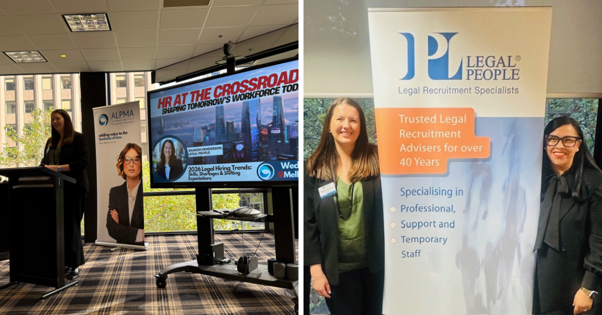
We explore how Melbourne's legal hiring market has fundamentally changed, from "job hugging" and mid-level lawyer shortages, to areas of law facing talent shortages.